
Pro-Europeans, reformists, liberals. A broad consensus of purpose, with only minor differences

In Milan, a rallying call for “europeisti.eu”, featuring, amongst others, Calenda, Picierno and Marattin. The Matteotti circles aim to “bring together the reformist movements”, the Sturzo Institute seeks to gather ideas from the Christian-democratic camp, and the Einaudi Foundation – with some caveats – operates on the liberal side, acting as the “ego and fulcrum of the balance”
16 JUN 26
Last updated: 14:16 | 3 JUL 26
Translated by AI
Image of Pro-Europeans, reformists, liberals. A broad consensus of purpose, with only minor differences

Photo: Ansa

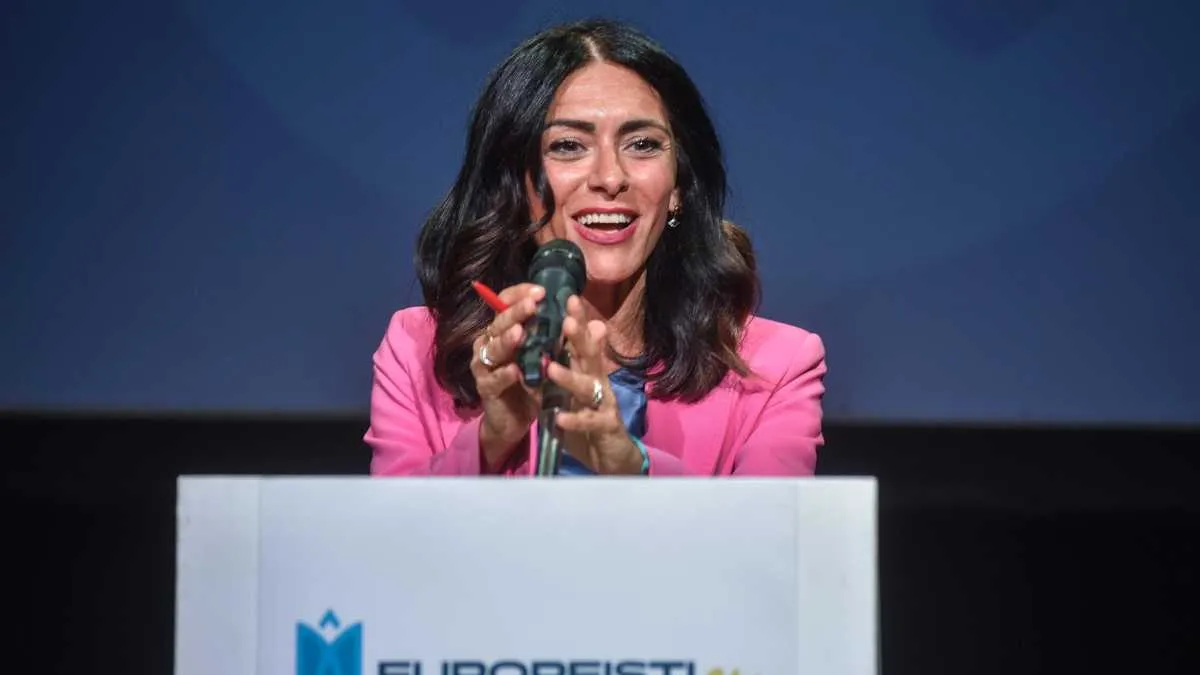
There was a major event to launch the europeisti.eu movement (yesterday, at the Teatro Franco Parenti in Milan), featuring special guests Mario Monti and Carlo Cottarelli, and attended by – amongst others – Carlo Calenda, Pina Picierno, Luigi Marattin, Piercamillo Falasca, Sergio Scalpelli and Daniele Nahum, who played a key role in promoting the initiative, with a view to building ‘a pro-European hub’. In parallel, there is the frantic and utterly desperate effort by a small coalition of willing observers, academics, legal experts, journalists, and politicians who, through associations, foundations, websites and theatres, are attempting to unite—at the centre, conceived as an alternative to any form of right-wing or left-wing populism, but also to a lacklustre coexistence with it—all those who could engage in dialogue but who sometimes do not (especially as the election year approaches and the ‘3 per cent’ threshold looms). And at that point, sometimes, even the associations and foundations of well-meaning individuals, in their own small way, get fed up. But they carry on. Because the idea is to resist, resist, resist and keep the dialogue going on what unites us most, beyond what divides us. And so, ‘liberals, socialists and populists’ arrived in Milan yesterday, as per the call, and also in Milan on the 25th, figures representing similar and different shades of reformism will gather within the Matteotti Circles – various personalities who, as explained by the reformist Democratic Party MP Lia Quartapelle, one of the founders of the first Matteotti Circle in Milan, “share the idea of bringing together the demands of reformist forces, even those from different political cultures, around common objectives”.
Firstly: curbing populism and nationalism. And so, on the 25th, Quartapelle and Picierno (fresh from the launch of her ‘Spazio Pubblico’) will be debating alongside Marianna Madia and Elisabetta Gualmini – former members of the Democratic Party now with IV and Azione respectively – and the reformist Democratic Party senator Simona Malpezzi. “It would be unforgivable if, in 2027, populist and nationalist forces were to prevail,” says Quartapelle. Standing in the way, however, are the elections themselves and, amidst the uncertainty surrounding the approval of the new electoral law, there are those who—despite the spirit of unity at these dialogue-focused events—refuse to give up the chance to participate under their own banner in order to maintain, as one insider puts it, “a small platform and a modest position of influence.” “We’re not talking about electoral lists, but about a method,” says Quartapelle, looking forward with confidence to a near future in which “personal ambitions give way to building something in the name of shared ideas”. Still within the Matteotti circle, but in Bergamo – home to the former mayor and now Democratic Party MEP Giorgio Gori (who, in the run-up to the referendum, had engaged in civilised discussions in Milan with Renzi supporter Ivan Scalfarotto, representing various viewpoints) – various topics are addressed ‘in depth’, including ‘the fragility of adolescence in the age of social media’, right from the very first inaugural meeting last September with Maria Elena Boschi, Claudio Martelli, Emilio Del Bono and Gori himself. The initiative, supported by the Franco Parenti group and Linkiesta.it, aims to bring together voices that may be distant from one another but are united by a pragmatic approach.
Meanwhile, in Rome—and this is nothing new—the Luigi Sturzo Institute has been attempting to bring together, through conferences and the presentation of essays, figures and ideas from the post-DC and Catholic-PD spheres: These range from commemorations of Aldo Moro and Franco Marini (last February, attended by Dario Franceschini, Pierferdinando Casini, Luigi Sbarra and Pierluigi Castagnetti) to webinars on ‘how forces with a Christian Democratic and conservative background can act as democratic stabilisers in the face of the polarising pressures of our time’. Equally relentless, though from a different perspective, is the networking work of the Luigi Einaudi Foundation, the research centre that promotes the understanding and dissemination of liberal political thought. Its president, Giuseppe Benedetto, was invited to yesterday’s event in Milan. He was unable to attend due to a clash of commitments, but (and here is the distinction) he says, regarding the desire to “bring together liberals, populists and socialists” – and he says this “as a European as well as a pro-European” – that “in all European countries, these three groups represent different political families. They can collaborate, but within the logic of distinction”. Meanwhile, the institute—having promoted a series of initiatives in support of the ‘Yes’ vote in the referendum—has long been working in tandem with Calenda on nuclear power, the justice system, proportional representation and a constituent assembly. But how, amongst foundations and associations driven by the loftiest of common aims, can one get down to brass tacks and move beyond splitting hairs? Benedetto plays it down by quoting Luca Bizzarri, who, in his podcast, alludes to liberals who “have read Tocqueville and Popper, but as soon as they see a ballot paper, they feel the irrepressible urge to found a party with their name in large letters. Everyone wants to be both the needle and the ego of the scales”. Best of luck.