Politics
behind the scenes •
The rift between Vannacci and FdI. Mollicone: “We can work together”
Beyond the red lines, there are points of agreement between Meloni’s supporters and the general, who continues to keep the lines of communication open. Donzelli: “I’m in opposition now. Vannacci? I listen to him, and some of the things he says aren’t wrong.” The points of agreement, from security to culture
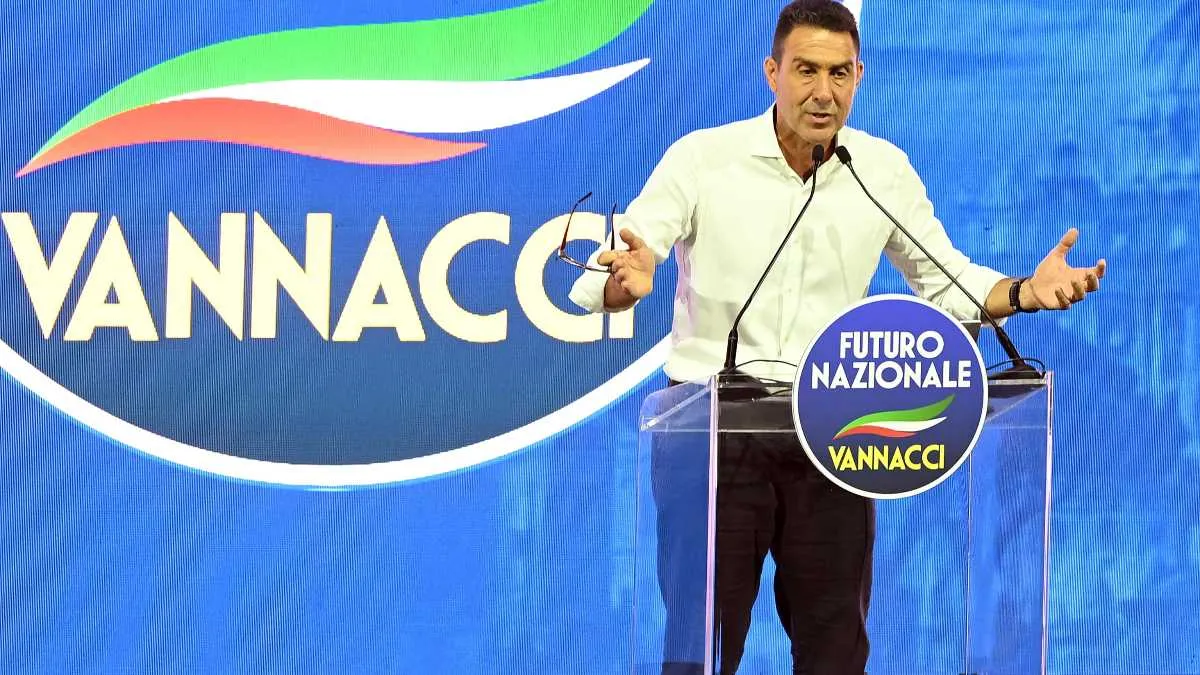
He draws red lines, attacks and wants to ‘take on’ Giorgio Almirante. But when he speaks of Giorgia Meloni, Roberto Vannacci chooses his words carefully. So far, he has avoided a head-on clash; he hasn’t shut the door. Perhaps this is also why Giovanni Donzelli says, echoing the general, ‘we are not allies today’. Tomorrow, who knows? It’s still early days. “Anyone who votes against the right-wing government is in opposition,” adds the Meloni-supporting colonel. But he also concedes: “The general? I listen to him, and some of the things he says aren’t wrong. We’ll choose our allies based on their ideas and how they behave.” Donzelli spoke during the launch of Tommaso Longobardi’s book (“Senza maschera. L’ascesa social di Giorgia Meloni”), the Prime Minister’s social media manager. Arianna Meloni is also present; she traces her sister’s journey and that of FdI, and highlights the Prime Minister’s “consistency” and “the symbolism of the ring of power – that is, power used as a means rather than allowing oneself to be dominated by power”. However, she is less inclined to discuss the general (referring to Donzelli’s response), who two days ago in Rome chaired the Constituent Assembly of the Futurists. The general certainly did not hold back, spouting various outbursts, including remarks on ‘remigration’ and the claim that ‘femicide does not exist’.
Yet when asked about Meloni – specifically, the words the Prime Minister had addressed in the Chamber to her ‘dirty dozen’ (who ‘serve the left’) – he merely said: ‘If she addresses me directly, I shall have the honour and pleasure of replying to her’. In short, he was content to rely on Laura Ravetto’s reply in the Chamber. Vannacci had also shown some caution in avoiding direct attacks on Meloni a few days earlier, at the rally held at the Salone delle Fontane in the EUR district on 4 June. This attitude was noted in Via della Scrofa. The most vehement attacks on Fn in recent hours, however, have come primarily from Noi Moderati and Forza Italia. Meloni’s supporters have limited themselves to the bare minimum, and even this is probably no coincidence. In Via della Scrofa, although no one acknowledges it publicly, attention is focused on the new electoral law (with particular attention to the preference vote), the polls (according to the latest SWG survey for La7, Vannacci stands at 5.3 per cent, the same as the Lega) and projections to assess Vannacci’s potential impact on the coalition and the majority bonus. While Donzelli himself notes—and warns—that “there is a difference between polls and actual votes,” in the Transatlantico—setting aside the customary denials—it is said that Meloni’s sherpas have had some contact with the Futurists to sound out each other’s intentions. Tuscany is said to be at the heart of the matter – the home region of Donzelli himself, but also of Massimiliano Simoni, Vannacci’s right-hand man and operational lead, who also spent time with Alleanza Nazionale and served as artistic director of the Versiliana Festival. Edoardo Ziello, another Tuscan, categorically denies this: “No contact whatsoever; it would be a waste of breath on their part.” Meanwhile, Domenico Furgiuele explains that “Italy is dying of moderation and civic-mindedness. It is the centre-right leaders who must discuss and make a decision on alliances. We are not chasing after anyone; we have our red lines and we will not change them”.
However, Federico Mollicone clarifies that there may be room for dialogue between Fn and FdI on certain issues: “In Parliament, we work together where there is, or may be, common ground,” the chair of the Culture Committee tells Il Foglio. After all, on issues that are long-standing causes for FdI – from culture to gender in schools (as well as security) – it is perhaps easier for Meloni’s supporters to find common ground with someone like Rossanno Sasso – one of his old proposals has already been incorporated into the Valditara decree – than with Forza Italia. “But there is a certain schizophrenia on the part of Fn,” adds Mollicone, sending a message to all concerned – Futurists and others alike: “This is not a centre-right government, but a right-of-centre one.”