
Sport
2026 World Cup •
Marko Farji’s derby: an Iraqi from Norway
The (rarely used) Venezia winger is making his World Cup debut for Iraq – his parents’ country of origin, though they are of Kurdish ethnicity – despite having been born and raised in Norway. In Italy, he has played just 21 minutes across two matches; at the World Cup, he is looking to make his mark in football
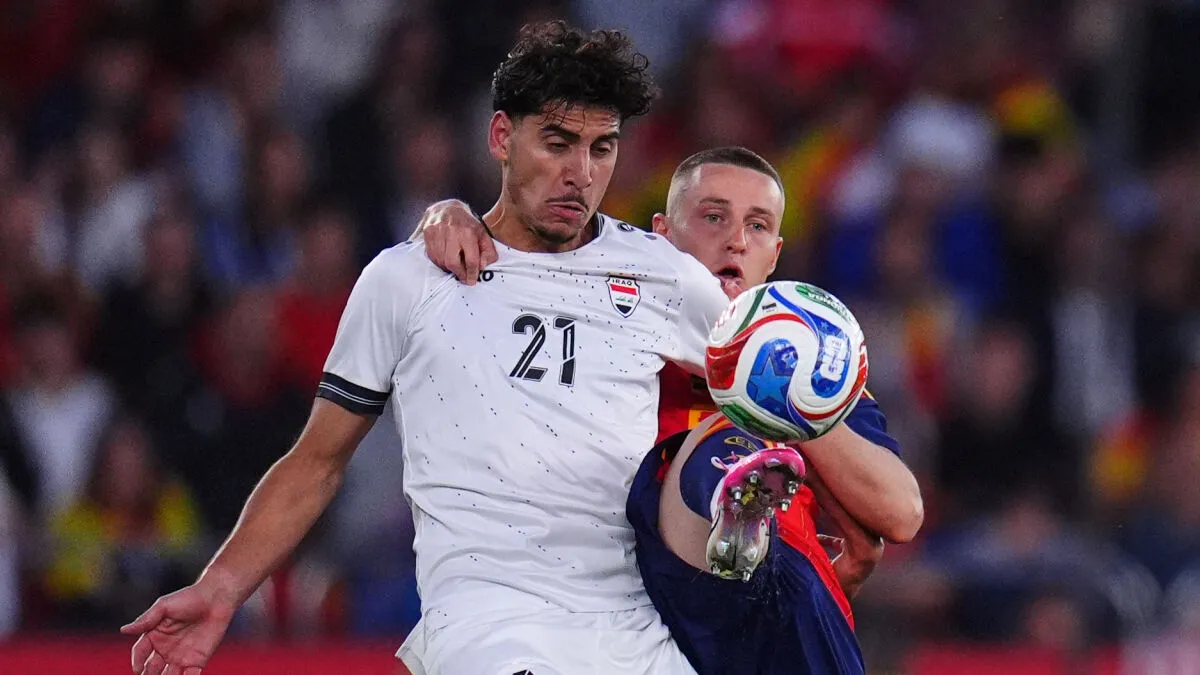
The ghost of the lagoon arrives at the World Cup. This is not the title of a fantasy sports novel, but the situation facing Marko Farji, winger for Venezia and the Iraqi national team, as he takes on Norway in the first match of the qualifying group: one ‘small’ detail is that the player is a Norwegian national; he was born in the Scandinavian country and had always played in its top flight until last winter.
In Venice, in fact, the 22-year-old has so far managed a meagre 21 minutes’ playing time across just two matches, remaining something of a mystery and seemingly outside Giovanni Stroppa’s plans. However, his selected national team—Iraq, from which his parents (of Kurdish ethnicity) fled—is positioning him as a key player in its effort to defy predictions that have the team eliminated in the first round.
I am adding a new sentence.
All this whilst, on his debut in Boston, he’ll be up against personal friends, former club-mates and the natural support of the home crowd for their own country: “I’m Norwegian; it’ll be incredibly exciting and even more special to face the country I come from,” he told the Oslo tabloid Verdens Gang. “Perhaps even more so for my family, who will be watching the match from home and heading out to soak up the atmosphere in Drammen,” the home town of “his” Strømsgodset.
Born in nearby Grimstad – like cyclists Thor Hushovd and Dag Otto Lauritzen – and having made his debut for local side Jerv, Farji has in fact come through the youth ranks with the Blues, where the top-flight league continues undeterred despite the World Cup. Yet, with no indication from the Norwegian Football Federation regarding a possible call-up to the youth teams, he instead accepted Iraq’s invitation, moving up to the senior national team a year and a half ago.
It was he who provided the decisive assist on the night of 1 April to Aymen Hussein, securing a victory over Bolivia in the international play-off and propelling the Mesopotamians back to a final tournament forty years after their first and only appearance. The match was also played in Mexico during the days of the war against Iran. Saddam Hussein would go on to invade Kuwait four years later.
That Marko is capable of impressing the fans of the team he plays for – including his closest supporters, who will have to put up with him – as well as the global audience, was also evident in the 4 June friendly against Spain (or rather, their reserves), which ended 1–1. The attacking winger made a great impression, managing to shake off Marc Bernal and forcing him to pick up a yellow card.
As is always the case in such situations, the issue of sporting nationality takes centre stage, along with the ease of opting for one national team or another depending on the circumstances of the moment: it was the draw that forced the Farji family – the father an engineer, originally from Sulaymaniyah – to split off part of their identity, both natural and reconstructed.
This is precisely what Yasin Ayari, Sweden’s new star, is said to have done: he scored a brace against his father’s Tunisia side, refraining from celebrating after the first goal and letting his emotions show after the second. Added to this is the Kurdish issue, which is fuelling controversy online amongst those who refuse to watch their champion play under the colours of Iraq, a country historically seen as an occupying and repressive power.
In short, this is no ordinary match, nor is he a player who goes unnoticed by his 200,000 followers: his arrival in Italy has drawn hundreds of Iraqis to Venezia’s online platforms, who ask themselves every day, ‘Where is Marko?’ and why he is sometimes not selected for the squad. In 2026 – and who knows for how long – this widespread popularity may still overshadow intimate and heart-warming stories.