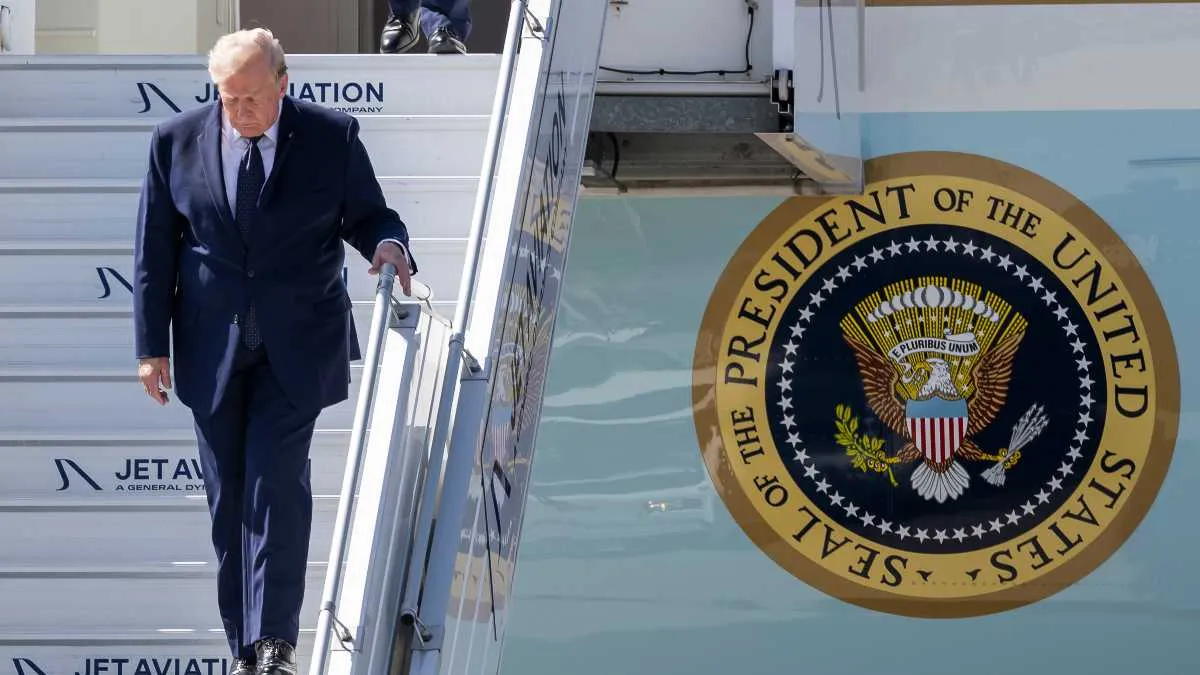
The Iranians are discussing the matter extensively, allowing details of the memorandum to leak to various regime-controlled media outlets. Unusually, the Americans are commenting less than usual. U.S. Vice-President J. D. Vance appeared on television to explain the agreement with the Islamic Republic, insisting that certain details remain to be finalised and that many will be clarified during the technical talks scheduled for the sixty days following the signing of the memorandum; nevertheless, he asserted that the Americans “have plenty of cards up their sleeve”. The word “cards” coming from this Administration recalls February 2025, when Donald Trump, prompted by Vance himself, told Ukrainian President Volodymyr Zelensky, “You don’t have the cards.” The “cards” have returned as an obsession, and in the coming days the Trump administration will have to demonstrate that the agreement—which is not a peace deal—is not as the Iranians portray it, but is good for everyone: the Americans, the Gulf states and Israel. The challenge is that every positive element Washington promises appears to be deferred to the technical negotiations phase, when the underlying issues—such as Iran’s nuclear program—will need to be addressed. In the meantime, however, Trump and Vance have signed the virtual agreement alongside the Speaker of the Iranian Parliament, Mohammad Ghalibaf. Today, the U.S. President arrived in France to attend the G7 summit; he dodged questions about the agreement, responding with such vagueness as to suggest he did not know which document he had signed.
Tehran has agreed to sign, confident that serious negotiations could last well beyond the sixty days – the ceasefire period set out in the memorandum to allow room for diplomacy – and is well aware that the art of delay, of dragging its adversaries into a negotiating limbo, can be straightforward when faced with someone who has demonstrated great patience in order to bring an end to a war. The Islamic Republic of Iran has so far gained much and given little, capitalising on the opening of the Strait of Hormuz—the true strategic failure of the US and Israeli war against Tehran. In exchange for the reopening—which had, in fact, been partly forced by the U.S. blockade of recent weeks—Iran secured significant economic relief, the return of some of its frozen assets, and control over Hormuz, the details of which could be discussed at a later date: “Our expectation is that the Strait will be opened without tolls in the long term. And this is the sort of thing we will define in these technical negotiations,” said Vance. The section on Hormuz, too, is therefore vague and not fully covered by the provisional agreement. Iranian officials claim they will gain access to a $300 billion reconstruction fund—roughly equivalent to Iran’s annual GDP—and Vance did not deny this assertion, despite the implausibility of the figure, merely stating: “It is the sort of thing they might have access to if they fulfil their obligations.”
The nuclear issue has been put on hold; for Iran, it is not a priority at present, and the damage to the uranium enrichment sites does not make the acquisition of nuclear weapons an immediate possibility. Now, the regime’s survival is more of an economic issue, and Trump, without seeking much reassurance, has already made several concessions. For Tehran, the nuclear issue can wait, particularly given that the memorandum no longer includes the other two of the three pillars on which the war was originally based, apart from uranium: the elimination of the missile programme and the dismantling of the network of alliances built by funding armed groups in the Middle East to destabilise the region and threaten Israel’s survival. Tehran has already begun rebuilding its arsenal, thanks in part to China’s help, and has received more reassurances than restrictions regarding its allies. Hezbollah, the Party of God in Lebanon, has always been Tehran’s best-armed and most well-supported proxy. “Trump was never interested in the Lebanese issue,” says Sima Shine, former head of the Mossad’s Research and Analysis Division and now an analyst at the Institute for National Security Studies in Tel Aviv (INSS). “He just wanted to wrap up the Iranian issue and made a huge mistake.” Iran insisted that the memorandum include a ceasefire in Lebanon, whilst Israel fought to keep the two fronts separate. “Now Trump’s signature amounts to recognition of Iran’s protection of Hezbollah. In Lebanon, there are hundreds of Pasdaran training the group’s fighters and making decisions that interfere with Lebanese politics and threaten Israel,” says Shine. It is now Lebanon, rather than the nuclear issue, that is causing Jerusalem concern, and with this memorandum, Trump has also undermined the negotiation efforts that the Lebanese government and Israel were undertaking, mediated by Washington, to free the country from Iran’s stranglehold and from Hezbollah’s ability to drag the country into war.
Israel believed it had found its strongest ally in Trump, yet it has been excluded from the decision-making process and is now compelled to reassess its defence policies. If—and this ‘if’ is echoed in Israel with a mixture of hope and disbelief—this memorandum evolves into something more substantial than a virtual accord, the ramifications could be significant.