
World
international intrigue •
The body of the woman who caused the explosion in Monte Carlo has been found in Ukraine
On 29 June, a backpack bomb exploded on Rue Révérend Père Louis Frolla, seriously injuring an oligarch of Ukrainian origin. The perpetrator of the attack was identified as Anastasiia Berezovska. Her body was found during the night between Monday and Tuesday
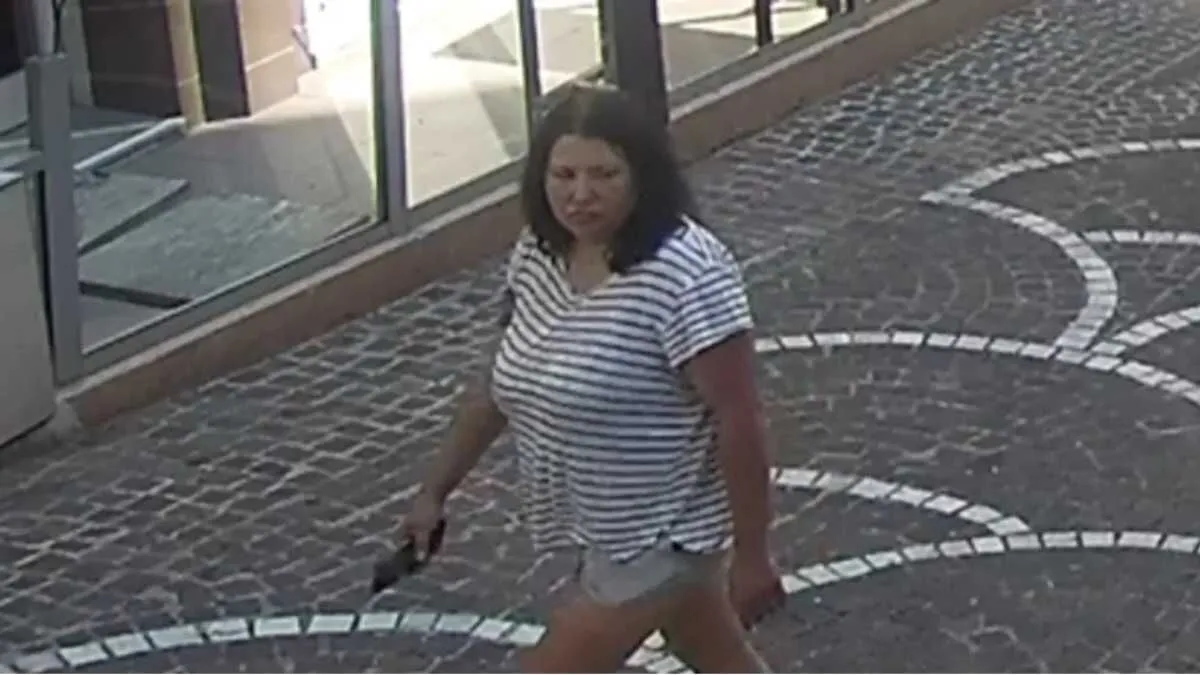
Anastasiia Berezovska was known to Interpol long before her name was linked to the backpack bomb that exploded in Monte Carlo on Rue Révérend Père Louis Frolla on 29 June, an attack in which the Ukrainian-born oligarch and now Cypriot citizen Vadim Ermolaev was seriously injured, his partner Anna Nasobina (who had both legs amputated) and their thirteen-year-old son. Berezovska was known as an “explosives expert” and “willing to put her knowledge at the service of anyone prepared to pay for it”, a member of Interpol’s operational coordination centre told Il Foglio. “Not a hitwoman, however, nor a woman linked to any criminal group”, but rather a sort of freelancer who lent her expertise to those who requested it. Anastasiia Berezovska is dead; her body was found on the outskirts of Kyiv. Sources at Ukrainska Pravda reported that she had been shot dead and that her body was discovered on the evening of Monday 6 July. The Ukrainian police and Interpol are trying to establish how she was killed, by whom and for what reason. Above all, they are trying to piece together that period of uncertainty in the woman’s life, spanning from 23 June – the day she disappeared without trace in Germany, where she was living – to the present day. What is known is that she is believed to have arrived in the Principality of Monaco between the evening of 24 June and the early hours of 25 June. In the days that followed, she is believed to have carried out reconnaissance in the vicinity of the building on Rue Révérend Père Louis Frolla, in front of which the backpack bomb exploded. After the explosion, the woman is believed to have crossed the border and got into a hire car in France, which had had its number plates changed and its GPS system deactivated – a system that is believed to have been linked to a car stolen in the days leading up to the explosion. It was precisely this that is believed to have enabled the woman to travel through Italy, Austria and Hungary without being noticed. As an expert in cryptography and digital forensics – who has been a consultant to the State Police for years – explained to Il Foglio, the total “absence of data traces allows a car that does not use toll roads to move freely throughout Europe, provided it is not carrying mobile phones, tablets, digital watches or other devices. Such a lack of traces would, however, prove problematic on toll roads, as it is precisely this absence that would arouse suspicion among the sensors installed at certain points along the European road network.” According to a source within the Ukrainian security forces, also speaking to Ukrainska Pravda, two men have reportedly been arrested in connection with the woman’s murder. They are reportedly an officer from the Main Intelligence Directorate (HUR) – the secret service under the Ministry of Defence – and a former police officer. There has been no confirmation from Interpol, but, as the member of the operational coordination centre we spoke to pointed out, “at present, there is no evidence of direct involvement by the Ukrainian secret services in either the explosion in Monte Carlo or the woman’s murder”.This is also because, in this story, it was not only Ukraine that had a score to settle with Vadim Ermolaev, the oligarch injured in the explosion – according to corroborating sources, as the Monegasque authorities have never officially confirmed his identity. The founder and owner of the Alef industrial and commercial group had not only circumvented the ban on trade with Russia imposed by Kyiv – trading in wine and medical supplies with Crimea – but was also at the centre of a network involving the diversion of food products, counterfeiting and a system of financial fraud spanning Cyprus – a country of which he had acquired citizenship – the Principality of Monaco, Liechtenstein and Russia. The main lines of inquiry, in fact, converge on two strands. The first: a warning from the Ukrainian security services to the ‘Monaco battalion’ – the oligarchs who had taken refuge on the Côte d’Azur and were accused by Kyiv of maintaining economic ties with Russia in Crimea – a theory reinforced by the arrests of an HUR officer and a former law enforcement officer in connection with the murder of the suspect. The second: a settling of scores linked to Ermolaev’s business dealings in the alcohol and property sectors, involving Crimea, money laundering and the Versobank affair – the Estonian bank of which Ermolaev was a co-owner. The European Central Bank revoked its licence in 2018 for systemic breaches of anti-money laundering regulations – one of many cases, alongside that of Danske Bank, which in recent years have shone a spotlight on so-called ‘Baltic money laundering’, the flow of capital of Russian and post-Soviet origin channelled through small banks in Estonia, Latvia and Lithuania before flowing into the Western financial system. The Munich public prosecutor has ruled out a terrorist link and indicated that the woman did not act alone.
