
Sections
A quick note •
Demolished monuments and literary beauty yet to come
The Institute for National Remembrance has concluded that Bulgakov’s work forms part of ‘Russian imperial policy’, and his dismissal has, once again, caused a rift in public opinion
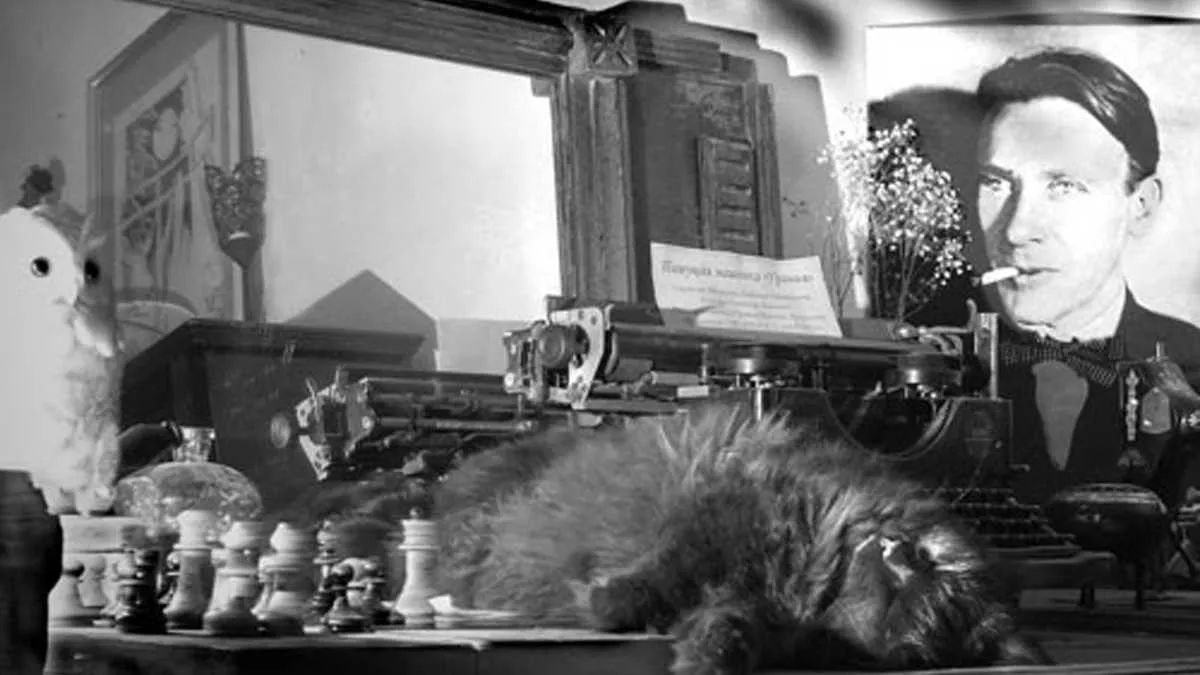
Photo: Ansa
Ukraine is the place from which to try to understand Europe today. In a speech published in full by Ukrainska Pravda, delivered in Berlin on Thursday, Kateryna Mykhalko explained that more than 80 per cent of Russian targets are taken out by the Ukrainians not thanks to tanks or artillery, but using drones and so-called autonomous systems. And that the proportion of European countries’ defence budgets allocated to the new generation of military technology amounts to barely 2 per cent. Two per cent of expenditure for 80 per cent of effectiveness. Her argument is a sort of military counterpoint to the encyclical on the magnificence of humanity: “Democratic societies regard human life as the supreme value. The answer does not simply lie in sending fewer people to the front line. The answer lies in building systems that extend human capabilities far beyond their vulnerability. This is, in essence, the role of modern technologies: they automate protection. They answer one of democracy’s most important questions: how can we protect citizens without sacrificing our most precious resource – human lives?” Of course, one might read this as a promotional pitch for arms production. Provided one reads it at all.
Also on Thursday, Zelensky and the Minister for Culture, Tetyana Berezhna, met the press in Kyiv, and the president spoke out – as he rarely does – on the issue of LGBTQ+ rights in Ukraine, after an interviewer, a war veteran and member of an LGBTQ+ NGO, had complained about the slow pace of legislative implementation. “I believe,” said Zelensky, “that any topic should be discussed openly in society; that is perfectly normal. We are here together, we are defending the state, we are the same people and we have the same rights, regardless of any prejudices people might have had in the fifteenth century. We are modern people.” Same-sex marriage and civil partnerships – which Zelensky had declared himself in favour of, as had 70 per cent of the population – are not legal in Ukraine. The call for “the same rights for everyone” has been met with intimidation and violence from far-right groups.
On 4 June in Kyiv, a couple of municipal employees dismantled the bronze statue of Mikhail Bulgakov – which had stood since 2007 on the central Andriyivskyy Descent, next to the house where the writer had spent his youth and which is now a museum dedicated to him – loaded it onto a lorry and returned it to the heirs of the famous sculptor, Mykola Rapay. Since the Russian invasion, pressure against his memory – like that of Odessa-born Anna Akhmatova – had intensified: the relief bearing his face on the museum’s façade had long been daubed with red paint. The Institute for National Memory had concluded that Bulgakov’s work formed part of “Russian imperial policy”. Bulgakov (1891–1940), the celebrated author of "The Master and Margarita" (published posthumously only in 1967) and "The White Guard", was born in Kyiv, spoke and wrote in Russian, and had a degree in medicine. "The White Guard" is the great novel set in Ukraine during the Civil War, between 1918 and 1919, published in 1924; its stage adaptation pleased Stalin and saved the author’s wretched life, though he died at the age of 49, censored and embittered. Bulgakov’s views and sentiments hostile to the Ukrainian language and national aspirations are primarily attributed to "The White Guard", although most critics and any attentive reader will realise that, almost in spite of the author, so to speak, the portrayal of the army, the people, the characters, their valour and their sincerity amounts to a form of recognition. This is also evident in the very portrayal of the pro-independence followers of Petliura.
Bulgakov’s removal in the name of ‘decolonisation’ has once again caused a rift in public opinion – which I deeply regret. I know that the ‘decolonisation’ camp brings together the most narrow-minded nationalists – emboldened by the war – with people who are genuinely offended by Russian arrogance and violence, and who are convinced that literary beauty must wait until freedom of body and thought is restored. Here is a comment by the Russian writer Boris Akunin. “What has happened between Russians and Ukrainians over the past four years is far more terrible than the toppling of a bronze statue or a stone monument. These monuments are being removed: well, that’s their business. Let the Ukrainians live as they wish to live, read the writers they wish to read – what really matters is that their ‘Russian compatriots’ stop tormenting and murdering them. For it is now clear that our paths have diverged and will never cross again… And in any case, we should not be concerned with which monuments are being demolished in other countries, but with which monuments are being erected here in Russia.” In Russia, monuments to Stalin and Dzerzhinsky are being erected.